

The loyalty and valor of German Shepherds have not only made them beloved pets but also formidable warriors. During both World Wars, these canines served with distinction, undertaking roles that stretched far beyond the companionship they are often sought for.
Their keen senses, intelligence, and trainability adapted them perfectly to the demands of wartime.
From acting as Red Cross dogs that searched for injured soldiers, to running through the trenches as messengers, German Shepherds have carved their mark in military history.
I remember reading about a German Shepherd named Rin Tin Tin, who exemplified the breed’s wartime contributions. He was rescued from a WWI battlefield and went on to become a Hollywood star, symbolizing the heroism of his brethren.
It’s this intertwining of heroism and heart that perhaps draws you to this breed. The bravery these dogs displayed in the face of conflict underscores their character as much as their physical prowess.
The tales of German Shepherds in World Wars might make you wonder about the traits that made them excel.
They’re not just about the bravery we admire in war stories; they’re also about the enduring attributes that make these dogs incredible companions today.
Have you considered what wartime roles your German Shepherd’s traits might suit?
Their story of bravery continues with each new generation, offering a remarkable legacy that melds seamlessly with their roles as protectors, partners, and friends.
Origins of the German Shepherd Breed
When you first meet a German Shepherd, it’s their air of confidence and intelligence that strikes you—but have you ever wondered where this remarkable breed began?
Development of the Breed
The origins of the German Shepherd can be traced back to late 19th-century Germany. During this time, there was a concerted effort to standardize dog breeds.
The goal was to create working dogs adept at herding sheep and protecting flocks from predators.
Max von Stephanitz, an ex-cavalry captain and former student of the Berlin Veterinary College, was instrumental in the creation of the breed.
In 1899, von Stephanitz found a dog named Hektor Linksrhein at a dog show that impressed him with its intelligence and discipline.
He purchased the dog, renaming it Horand von Grafrath, and declared it the first German Shepherd, marking the beginning of the breed.
- Year Founded: 1899
- Original Purpose: Herding and flock protection
- Key Attributes: Intelligence, discipline, strength
Influential Figures in Breed History
Max von Stephanitz is often hailed as the father of the German Shepherd breed. His philosophy was “Utility and intelligence”—he believed a dog’s worth was primarily in its usefulness to humans.
Von Stephanitz founded the Verein für Deutsche Schäferhunde, the German Shepherd Dog Club, to standardize and promote the breed.
Through his leadership and rigorous breeding programs, the German Shepherd quickly gained a reputation for versatility, excelling not just in herding but also in various roles such as guard dogs, police work, search and rescue, and military tasks.
- Max von Stephanitz: Ex-cavalry captain, breed pioneer
- Horand von Grafrath: The first German Shepherd
- Verein für Deutsche Schäferhunde: The German Shepherd Dog Club
You might be amazed to know that the qualities you admire in your German Shepherd have been carefully nurtured over a century ago.
Every time you look into the eyes of your loyal companion, remember the dedication of those who shaped this breed into the dependable partner by your side.
Isn’t it fascinating how history shapes our present companionship with these dogs? Have you ever seen these traits in action with your German Shepherd?
The German Shepherd In World Wars
German Shepherds in World War I
During World War I, German Shepherds served with distinction in various roles, demonstrating their versatility and tenacity in the face of conflict. Their intelligence and trainability made them invaluable assets on the battlefield.
Roles of German Shepherds
- Communication: They carried messages in capsules attached to their bodies, navigating through hazardous terrain.
- Rescue Missions: German Shepherds located wounded soldiers, often saving lives under severe conditions.
- Guard Duty: They protected encampments and military installations, alerting troops to enemy presence with their keen senses.
- Carrying Supplies: These dogs transported essential items, such as medical supplies and food, to front-line troops.
Notable War Dogs
- Stubby: Though not a German Shepherd, this brave dog deserves mention. Stubby, a mixed-breed dog, served with the U.S. 102nd Infantry and became a symbol of canine heroism during WWI.
- Rin Tin Tin: Rescued from a WWI battlefield, Rin Tin Tin became a Hollywood star, highlighting the breed’s capabilities and contributing to their popularity post-war.
Training and Preparation
- Obedience Training: German Shepherds underwent rigorous training to follow complex commands amidst the chaos of war.
- Conditioning: They were conditioned to endure gunfire and explosions without showing fear or hesitation.
- Specialized Training: Depending on their roles, training varied to hone specific skills needed for tasks such as tracking, message delivery, and search and rescue.
Did you know that some of these heroic canines even earned rank for their service? If you were in charge of training a war dog, which qualities would you focus on enhancing?
German Shepherds in World War II
In World War II, German Shepherds saw an expanded set of roles, from messengers to guard dogs, and their training evolved significantly during this period, showcasing not just their bravery but their adaptability to various military tasks.
Expansion of Roles
During the Second World War, German Shepherds took on a multitude of critical roles on and off the battlefield. Here are some of the key functions they served:
- Messengers: They relayed vital messages between units where traditional communication methods failed or were compromised.
- Sentry Dogs: German Shepherds were placed on active guard duty to warn soldiers of incoming threats.
- Mine Detection: These intelligent dogs were trained to detect landmines and other explosives, saving countless lives.
- Search and Rescue: Amid the chaos of war, they found and assisted wounded soldiers, often under hazardous conditions.
Famous German Shepherds in WWII
Several German Shepherds gained renown for their service:
- Chips: A heroic dog who served as a sentry and even helped to capture an enemy machine-gun nest.
- Rin Tin Tin IV: Although not directly involved in the conflict, he helped to boost morale on the home front through films and performances.
Advancements in Training
World War II brought about significant advancements in how German Shepherds were trained:
- Use of Positive Reinforcement: Enhanced methods like rewards-based training increased effectiveness and efficiency.
- Specialization: Training became tailored to specific roles such as tracking, mine detection, and message delivery.
As you think about the history of these incredible dogs, consider the ways these roles have shaped the training and behavior of the German Shepherds you encounter today. How might their versatility and intelligence be put to use in modern-day tasks?
Legacy and Recognition
German Shepherds hold a remarkable place in military history, distinguished by their unwavering loyalty and the pivotal roles they played in the World Wars. Their contributions have not only cemented their status as heroic companions but also influenced their post-war evolution as a breed.
Memorials and Monuments
- The War Dog Memorial, Michigan: A powerful tribute to the canine heroes of World War I.
- Sited: Established in 1925
- Sculpture: Depicts a German Shepherd in a robust stance
- The PDSA Dickin Medal: Known as the animal’s Victoria Cross, it honors the bravest of the brave.
- Instituted: 1943
- German Shepherd Recipients: Include Rip, a WWII search and rescue dog
Post-war Breed Development
Selective Breeding: Focused on enhancing traits such as intelligence, courage, and loyalty.
- Modern German Shepherds: Orchestrated breeding over generations has resulted in:
- Increased versatility
- Prevalence in law enforcement and service roles
- Health and Temperament: Priority concerns in contemporary breeding practices.
- Certified breeding programs: Focus on mitigating hereditary health issues
Did you know there are memorials dedicated to these canine heroes? How does this recognition of their past impact the way you view German Shepherds today? Have the breed improvements post-war influenced what you look for in a modern German Shepherd?
Modern Military and Police Work
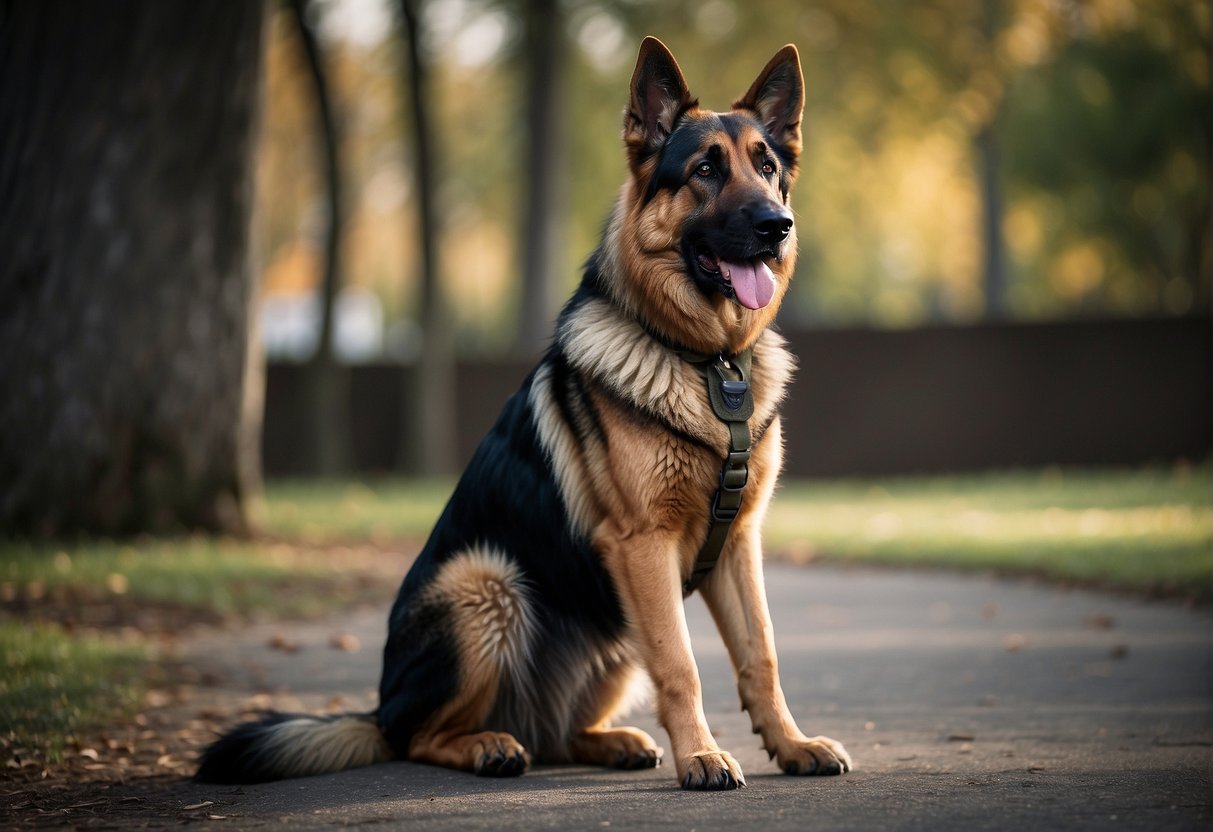
As a committed German Shepherd owner and enthusiast, I can’t help but marvel at the evolution of German Shepherds from World War heroes to present-day guardians in military and police roles. This section shines a light on their continued dedication to service and the cutting-edge training methods that prepare them for modern challenges.
Continued Breeding for Service
German Shepherds remain an impeccable choice for military and police work due to their intelligence, strength, and loyalty. Breeding programs focus on:
- Health: Ensuring they are free from genetic disorders to handle the physical demands of service.
- Temperament: Selecting dogs with the right balance of aggression and control is imperative for varied and potentially dangerous situations.
These attributes are the pillars that support their relentless drive and capability to perform complex tasks, keeping us safe in ways that are sometimes beyond our understanding.
Current Training Methods
Training a German Shepherd for modern service roles is no small feat. It involves:
- Basic Obedience: Sit, stay, and heel are the bedrock upon which all other training is built.
- Specialized Skills:
- Search and Rescue: Trained to locate individuals using their keen sense of smell.
- Drug Detection: Their noses can detect a wide range of illegal substances.
- Explosive Ordnance Disposal: They learn to identify the scent of various explosives.
The emphasis on positive reinforcement combined with appropriate discipline molds these canines into disciplined yet caring partners. They can be relied upon in high-stress situations.
Seeing them in action, you might wonder how they make split-second decisions or navigate complex commands. Well, a highly structured and rigorous training regime taps into their natural instincts. Without a doubt, these dogs are nothing short of remarkable. If you’re considering a service dog, how might you prepare your German Shepherd for the demanding but rewarding roles ahead?
Conclusion
In the throes of battle, the German Shepherds stood as unsung heroes alongside soldiers. They exhibited courage that earned them medals and a place in the annals of military history.
Their roles spanned from tactical support to comfort for the troops, proving their versatility beyond doubt.
- Roles: German Shepherds served as messengers, guards, and rescue dogs.
- Impact: These courageous dogs saved countless lives with their bravery and instincts.
- Recognition: Their contributions were acknowledged through various military commendations.
Have you ever marveled at your German Shepherd’s attentive gaze and wondered about the tales of valor it symbolizes?
Imagine the grit these companions had as they navigated treacherous grounds to deliver crucial messages.
Reflect on your faithful friend’s lineage—their legacy is one of both loyalty and heroism.
Consider the life-saving instincts your German Shepherd may share with its wartime predecessors.
Perhaps teach them a new trick or task, as a nod to their historical capabilities.
Their past enriches the bond you share today, a timeless connection between trust and friendship.
Have you witnessed moments of bravery in your German Shepherd that echo this storied past?
Share your experiences, honoring the legacy that shapes your dog’s noble character.